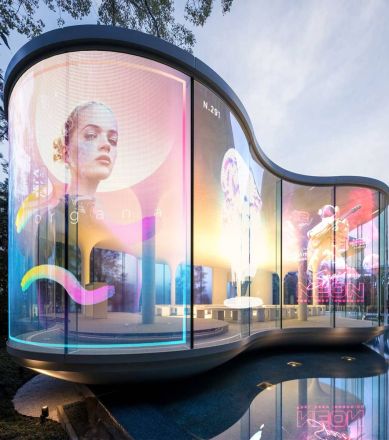
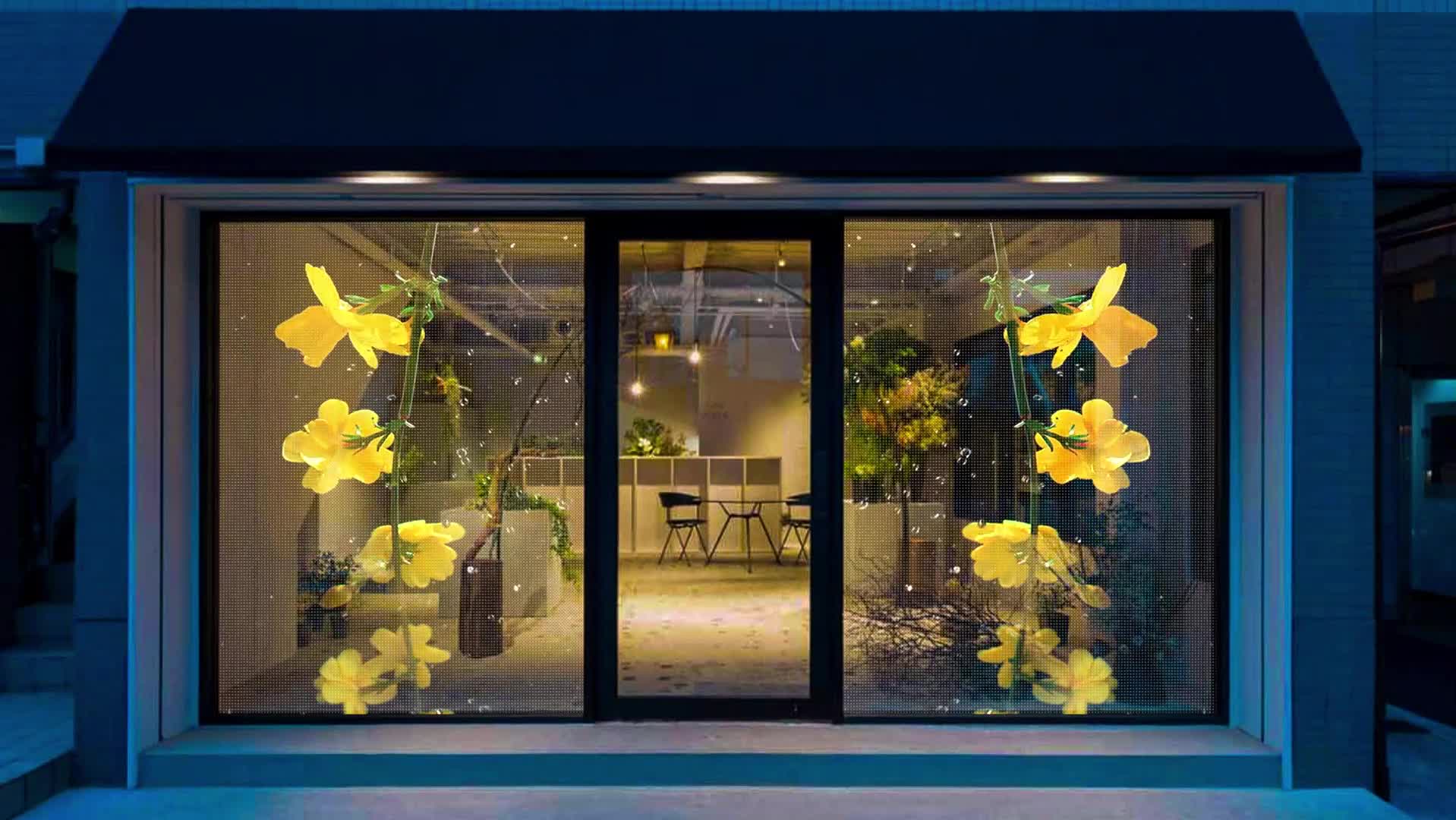
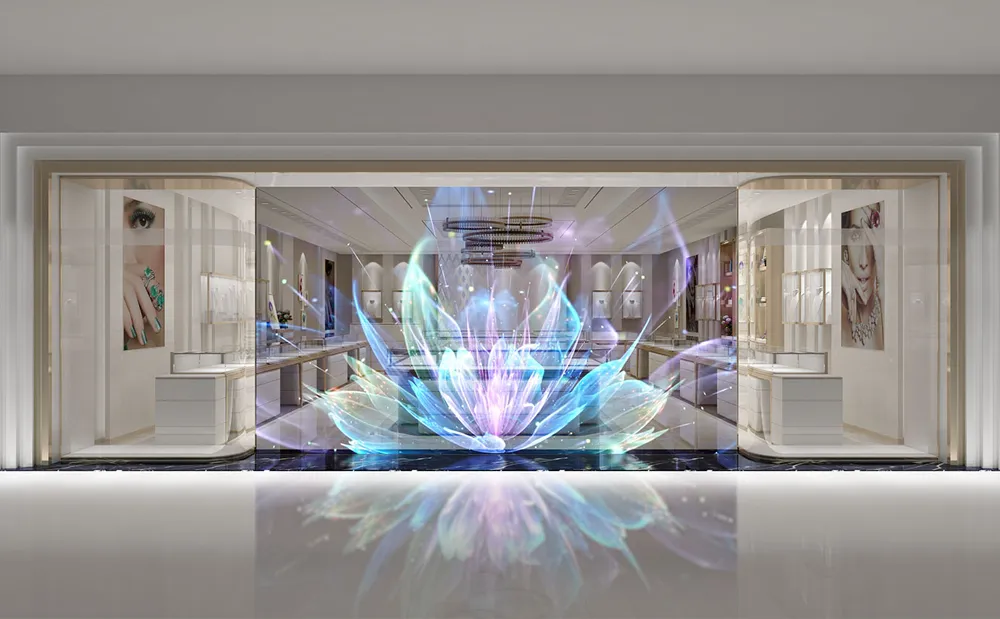
Holographic Effect Transparent LED Mesh Screen **Enquire Quote**

Out of stock
SKU
Holographic Effect Transparent LED Mesh Screen **Enquire Quote**
$0.00

What Is a Holographic Transparent LED Mesh Screen?


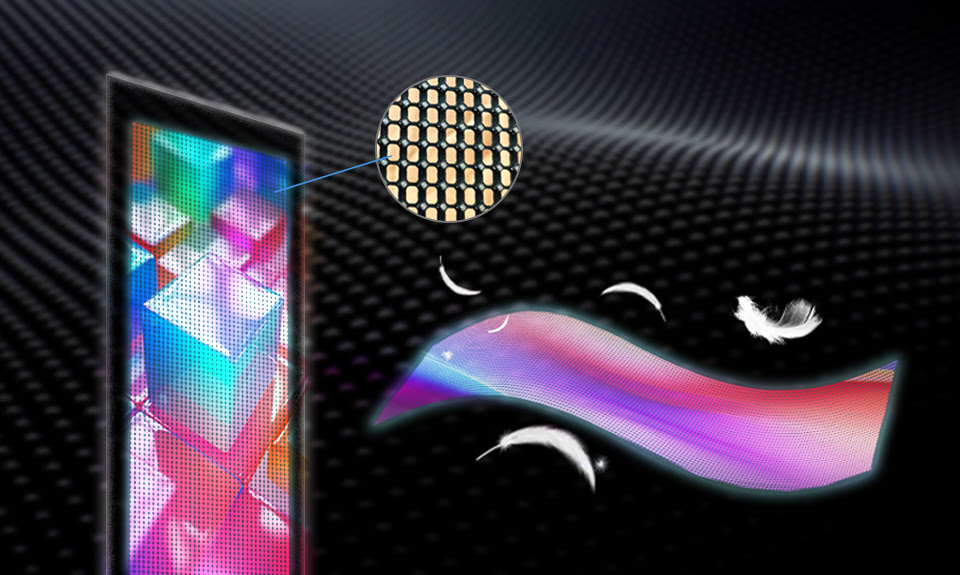
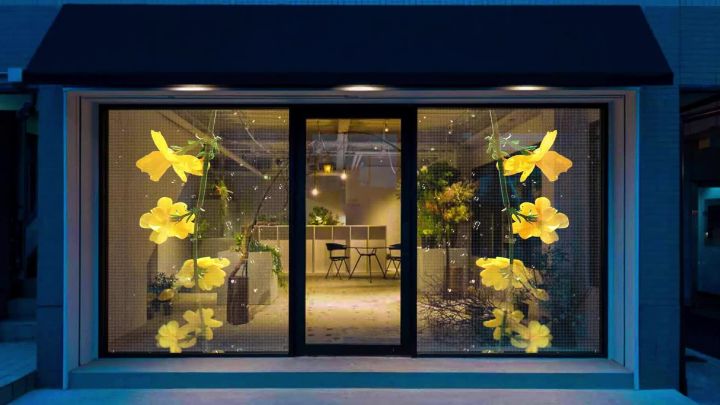
The active display is an open grid containing miniature RGB LED pixels, driver components and conductive tracks. Most of the surface is physically empty, so daylight and sightlines pass through the display. When the LEDs are illuminated, the mesh behaves like a conventional full-colour LED screen; when they are dark, the grid becomes comparatively difficult to see from the intended viewing distance. [1,2]

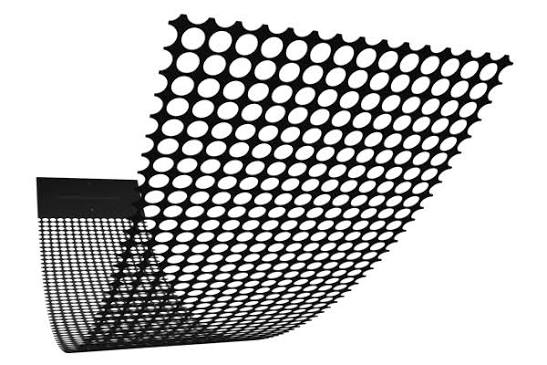
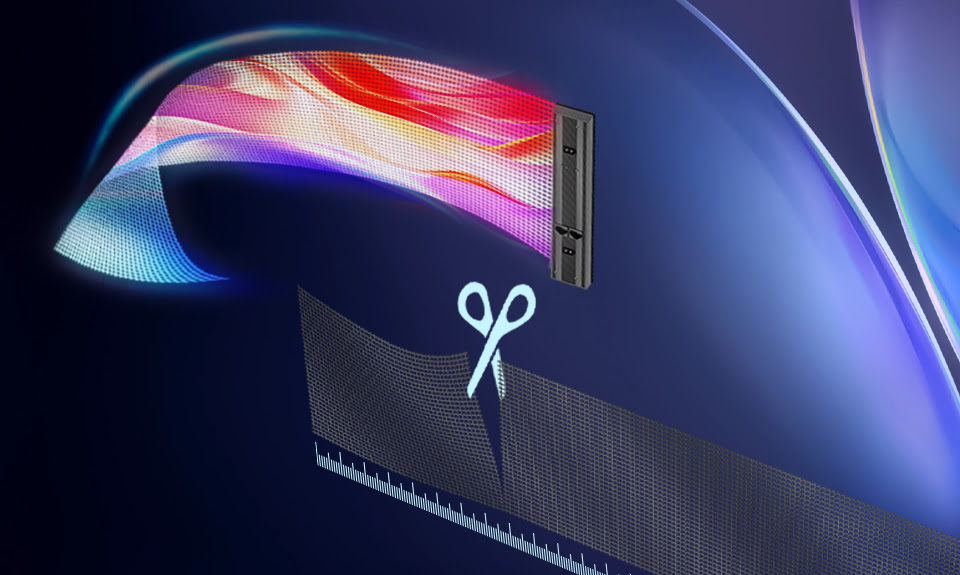
Unlike a rigid transparent LED screen, the product shown here is not built from thick aluminium cabinets and horizontal LED bars. Its perforated mesh can follow a controlled curve and can be assembled into a large, nearly borderless canvas with control hardware located at the perimeter. Selected models may also be trimmed along approved cutting zones. [1,2,5]

How the Product Creates the “Floating” Appearance

·  The real background remains visible through the open grid.

·  Bright LED objects are separated from that background by high contrast.

·  Black or unlit areas of the video effectively disappear because the LEDs emit little or no light there.

·  Perspective, shadow, rotation, particles and edge lighting give the content depth cues.

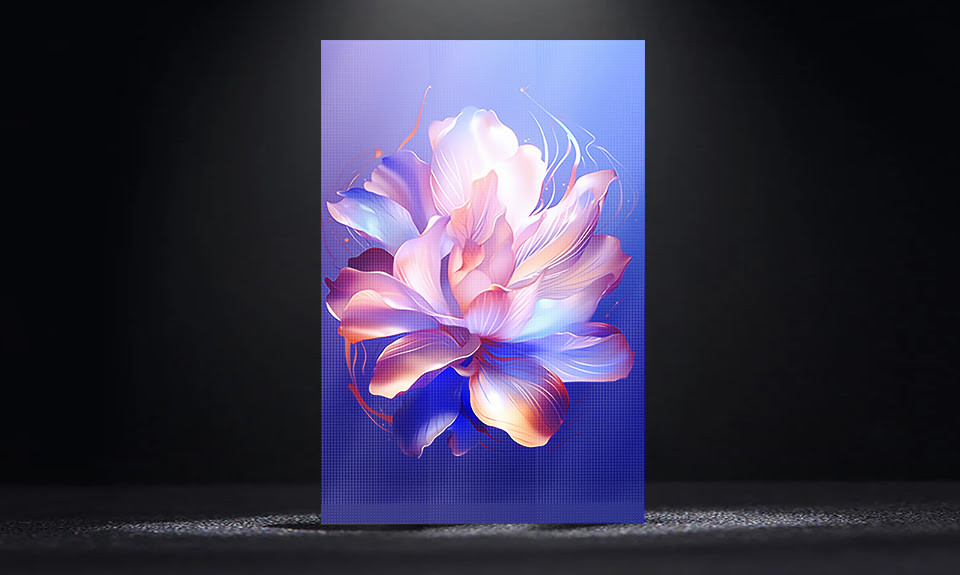
·  At the correct viewing distance, the fine grid becomes less noticeable and the image appears to occupy the surrounding space.

Core Product Characteristics


Very High Transparency

The perforated structure preserves daylight

and the view through the glass. Selected

commercial series quote more than 90%

transparency and up to approximately 95%,

depending on pitch and layout.

Ultra-Thin Active Layer

The emitting mesh is far slimmer than a framed LED

cabinet. The edge control boxes, connectors and

cable routes remain thicker and must be allowed for

in the design.

Flexible Open-Grid Construction

The mesh can form controlled curves and

non-standard shapes on approved product

series, making it suitable for creative

windows and architectural features.

Cuttable on Selected Models

Some systems can be trimmed along designated

zones without interrupting the remaining circuit.

Cutting outside approved areas can damage data

and power tracks.

Self-Emissive Image

Each RGB pixel generates its own light, so no

projector or backlight is required. This

supports strong colour and contrast in

illuminated commercial environments.

Borderless Visual Area

Power and signal hardware can be positioned at

the top, bottom or sides, leaving the main image

area largely free of bulky framing.

High Gray-Scale Control

Professional LED drive systems support

smooth gradients, controlled low-brightness

performance and stable video playback.

Exact bit depth and refresh rate are model-

specific.

Modular Scalability

Mesh strips or panels can be joined horizontally and

vertically and mapped as one screen, subject to

controller capacity and the manufacturer’s

maximum panel configuration.


Open-grid construction combines image-producing LEDs with high transparency.

Selected models support controlled bending

or trimming only within approved limits

Technical Principle: How the Display Works


1

Content source

A media player, computer or digital-signage platform outputs video or animation at the correct canvas resolution.


2

LED controller

A sending device or video processor scales the content and maps it to the installed pixel coordinates.


3

Power and receiving electronics

Power supplies and receiving cards distribute low-voltage power and image data. These components are normally housed in edge-mounted boxes.


4

RGB LED pixels

Each pixel combines red, green and blue light-emitting elements. Their intensity is varied to create full-colour graphics and video.


5

Perforated circuit mesh

LEDs, drivers and conductive paths occupy only a small part of the surface. The openings preserve the view and allow light to pass through.


6

Perceived spatial image

Purpose-designed content uses darkness, perspective and motion to make bright objects appear suspended over or within the real background.


Important: the “3D” effect comes from both hardware and content

The mesh does not automatically convert ordinary footage into a hologram. Black-background animation, isolated objects, clean silhouettes, controlled motion, shadow, parallax and bright edge lighting normally produce the strongest result. Full-screen white backgrounds make the physical grid more visible and reduce the illusion.


Step

System Element

Function

Indicative Technical Profile


The following values describe common market configurations for this product family and the models referenced in the supplied documents. They are not a project specification. Final values must be confirmed from the selected model’s datasheet, wiring diagram and installation manual. [1,2,5]

Parameter

Indicative Information

Display technology

Direct-view RGB LED mesh / perforated PCB or hollow-grid architecture

Transparency

Commonly above 90%; selected models quote up to approximately 95%

Pixel pitch

Model-dependent; representative options include approximately P3.91, P4.81, P3.9 x 7.8 and P6.25

Panel format

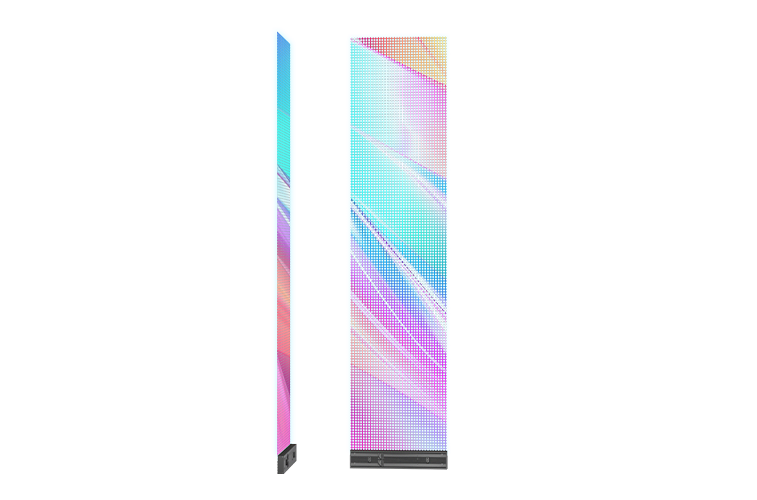
Some commercial systems use strip-style panels approximately 250 mm high and around 1.0-1.5 m long; other formats vary

Active display thickness

Selected emitting mesh below 2 mm; edge boxes and connectors add local depth

Gray scale and refresh

Professional high-gray-scale and high-refresh configurations are available; confirm the exact controller and receiving-card specification

Input and control

Computer, media player or signage player through an LED video processor/controller; HDMI, DVI and network workflows are common

Mounting interface

Adhesive or mechanical glass interface, edge rail, hanging frame or freestanding structure, depending on product series

Environment

Indoor and semi-outdoor use behind glass is common; fully exposed outdoor use requires a complete weather-rated system

Service approach

Access is required to edge electronics, cable joints and replaceable mesh sections or modules

Project Selection Factors

Viewing distance

Finer pitch improves close-range detail but usually increases cost, data load and visual density.

Window orientation

Direct sun, reflections and bright exterior backgrounds determine the brightness and contrast required.

Content type

Floating product animation has different resolution needs from small text, wayfinding or full-screen branding.

Glass construction

Coatings, laminates, curvature, mullions, thermal exposure and access can affect the mounting method.

Screen dimensions

The final size must align with panel increments, controller capacity and the chosen content aspect ratio.

Maintenance access

Provide safe access to power supplies, receiving cards, cables and replaceable display sections.

Suitable Applications


Retail Storefronts

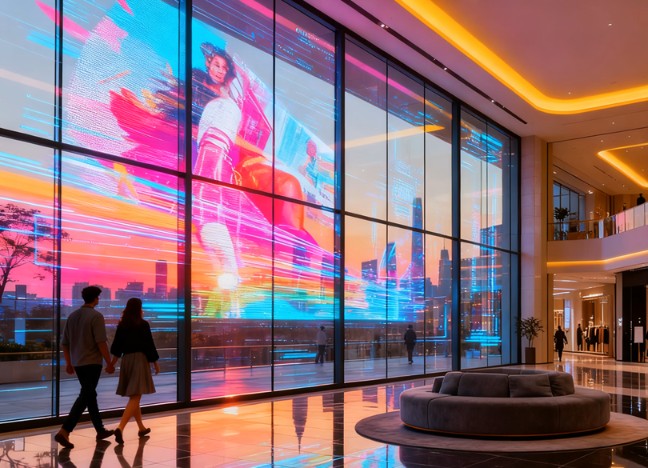
Display product launches, seasonal campaigns and animated brand stories without hiding merchandise or closing the visual connection between the street and the shop interior.

Showrooms and Product Displays

Overlay specifications, motion graphics and product highlights in front of vehicles, models, electronics or luxury goods while keeping the physical product visible.

Corporate Lobbies and Hospitality

Create architectural media, welcome content and premium brand experiences while maintaining open sightlines and daylight.

Museums, Galleries and Exhibitions

Add animation, interpretation or contextual graphics in front of exhibits without placing an opaque monitor between the viewer and the object.

Events, Stages and Launches

Produce floating logos, scenic layers and transparent digital backdrops using hanging or freestanding systems.

Airports, Stations and Public Spaces

Combine advertising, information and wayfinding with glazed architecture in terminals, concourses and high-traffic interiors.

Installation Methods


The installation method must match the exact product construction. Not every transparent LED mesh is adhesive, cuttable, bendable or suitable for outdoor exposure. Final mounting, electrical and structural details must follow the manufacturer’s drawings and local project requirements.

Direct Glass Mounting

The mesh or panel is attached to a clean, flat and compatible glass surface using the approved adhesive or mounting interface. This creates the least visually intrusive permanent installation.

Top / Bottom Edge-Control Layout

Control boxes and connection hardware are positioned above or below the display. This arrangement is useful where the vertical sides must remain visually clean.

Side-Control Layout

Power and signal components are located at one or both sides. It can suit long horizontal displays or locations with restricted ceiling and floor access.

Suspended or Hanging System

Lightweight panels are hung from a rated support, truss or ceiling structure. This is common for events, atriums, exhibitions and scenic applications.

Floor-Standing or Mobile Unit

The mesh is integrated into a freestanding frame, plinth or mobile base for temporary activations, launches and spaces where the glass cannot be modified.

Custom Curved Integration

Selected product families can follow a controlled radius or create an undulating form. The minimum bend radius, support spacing and cable routing must be approved before fabrication.


Glass and structure must be assessed before installation

Confirm the glass type, coatings, flatness, surface temperature, structural suitability and adhesive compatibility. Suspended and freestanding systems may require structural engineering. The glass should not be assumed to carry the display load unless the mounting system has been specifically designed and approved for that purpose.


Recommended Installation Workflow


Step

Stage

Key Actions


1

Site survey

Measure the visible glass area, mullions, access routes, ceiling and floor conditions, ambient light, viewing distance and proposed display position.


2

Product and pitch selection

Select pixel pitch, panel format, transparency, brightness and mounting method for the viewing distance and window orientation.


3

Display layout

Confirm the active image area, panel increments, edge-box position, cable routes, service zones and final content aspect ratio.


4

Electrical and signal planning

Confirm dedicated circuits, isolation, earthing, ventilation, controller position, network access and cable containment.


5

Glass / structure assessment

Check glass type, coatings, curvature, temperature exposure and adhesive compatibility. Obtain structural advice where required.


6

Dry layout and alignment

Mark panel sequence, reference lines, control-box positions and connection directions before removing liners or fixing hardware.


7

Panel installation

Install edge rails or control boxes, then apply or connect the mesh sections in the specified order without twisting, overstretching or crushing the grid.


8

Power and data connection

Connect power and signal links exactly as shown in the wiring diagram. Avoid unsupported cable loads and maintain access to connectors.


9

Controller commissioning

Load receiving-card files, map panel coordinates, set brightness limits, test calibration patterns and confirm colour consistency.


10

Content and handover

Test final content in day and night conditions. Record controller files, wiring diagrams, panel IDs, spares, cleaning instructions and safe isolation procedures.


Installation and Maintenance Considerations

·  Provide ventilation and manufacturer-specified clearances around power supplies and controller boxes.

·  Keep all cable joints strain-relieved and accessible; do not allow connectors to hang from the mesh.

·  Use the approved cleaning method. Solvents, abrasive tools and excessive pressure can damage LEDs, coatings or adhesive interfaces.

·  Do not cut or bend a panel unless the exact model is designed for it and the approved zones or radius are known.

·  For mission-critical installations, retain spare mesh sections, controller files, receiving cards and power supplies.

·  Review the complete system rating for temperature, humidity, UV exposure and ingress protection—not only the LED mesh itself.


Safety and compliance

Use qualified installers and comply with applicable electrical, structural, fire, access and building requirements. This guide is a product overview, not a construction or electrical specification.

Comparison with Other Transparent LED Technologies

Product names are not standardised across the industry. “Holographic LED”, “mesh LED”, “crystal film”, “transparent LED film” and “transparent LED screen” can overlap in supplier marketing. The comparison below is based on physical construction and installation method rather than product name alone. [3-7]

Criteria

Holographic Transparent LED Mesh

Transparent LED Film

Framed Transparent LED Screen

Basic construction

Perforated flexible or semi-flexible LED mesh with integrated pixels/drivers and edge electronics

LED pixels and conductive tracks integrated into a clear adhesive film or flexible transparent substrate

Rigid LED bars or slats mounted inside modular aluminium cabinets or frames

Typical mounting

Direct glass interface, edge rails, top/bottom or side-control layout, hanging or freestanding frame

Normally adhered directly to existing glass with minimal framing

Cabinets mounted behind glass, suspended, floor-supported or fixed to a structural frame

Transparency

Usually the highest; commonly above 90% and up to about 95% on selected models

Typically around 80-90%, depending on pitch, circuit design and film construction

Commonly around 70-85%, depending on LED-bar spacing and pixel pitch

Appearance when off

Fine perforated grid remains visible at close range; edge control boxes are visible

Clear film and fine circuit pattern remain visible at close range

Cabinet, frame and LED slats are more visible

Thickness and weight

2mm approx.

1-2 KG / Square Meter

Very thin active mesh; edge electronics add local depth

2-4mm

2-4 KG / Square Meter

Ultra-thin and lightweight across the glass surface

20-40mm

8-12 KG / Square Meter


Thicker and heavier cabinet construction, but mechanically robust

Brightness capability

5000 – 6000 nits

Model-dependent; selected for premium window and experiential content when correctly specified

6000-7000 nits

Often selected for indoor or behind-glass retrofits where thinness and transparency are priorities

6000-7000 nits

Generally the strongest daylight brightness and widest range of weather-rated options

Flexibility / shaping

Some models can bend or be trimmed in approved zones

Often flexible and suited to curved or irregular glass, subject to the film design

Normally rigid and rectangular, although custom cabinet shapes are possible

Scalability

Mesh strips can create medium and large seamless canvases

Good for continuous glazing, subject to film dimensions and connection design

Best for very large facades and robust high-brightness installations

Maintenance

Requires access to edge boxes and a model-specific panel/section repair method

Film sections may need replacement; adhesive installation can complicate removal

Cabinet modules, power supplies and receiving cards are usually easier to access and replace

Best use cases

Premium storefronts, product displays, showrooms, exhibitions and floating-image effects

Retrofit windows, partitions, curved glazing and discreet architectural media

Large shopfronts, atriums, facades and high-ambient-light or outdoor-rated projects

Primary trade-off

Maximum subtlety depends heavily on content, pitch and precise installation

Minimal profile and flexible glass coverage, but model-dependent brightness and serviceability

Greater brightness and robustness, but lower transparency and more visible structure

                                                                      Indicative transparency and performance ranges vary significantly by manufacturer and model. Always compare the actual product datasheets for the proposed installation.

Which Transparent LED Technology Should Be Selected?

Recommendation

Best Fit

Choose holographic transparent LED mesh when...

the priority is the most open, visually light and nearly borderless display area, together with a premium floating-image effect over real products or interiors.

Choose transparent LED film when...

the priority is a direct-to-glass retrofit, a continuous transparent substrate, curved glazing or a very discreet film-style installation.

Choose framed transparent LED screen when...

the priority is maximum brightness, very large scale, robust cabinet service access or a purpose-designed outdoor / facade solution.

Quick Decision Matrix

Project Priority

Mesh / “Holographic”

LED Film

Framed Screen

Highest transparency / least visible structure

Excellent

Excellent

Moderate

Direct glass retrofit

Very good on compatible systems

Excellent

Limited

Controlled curves / creative shapes

Very good on approved systems

Excellent

Limited to custom cabinets

Maximum daylight brightness

Model-dependent

Model-dependent

Excellent

Large facade / weather exposure

Only rated systems

Only rated systems

Usually best option

Easy cabinet-level service access

Moderate

Moderate to limited

Excellent

Floating-object creative content

Excellent

Very good

Good

Fine text at close viewing distance

Pitch-dependent

Pitch-dependent

Often strongest range of fine-pitch options

Practical selection rule

Start with the closest viewing distance, ambient-light condition, glass construction, screen size, required transparency and maintenance access. Select the technology only after these constraints are understood—not from the product name alone.


Frequently Asked Questions


Is it a true hologram?

Not usually. “Holographic LED” is a commercial term for an ultra-transparent direct-view LED screen. The floating appearance is created by the transparent background and purpose-designed content; true optical holography reconstructs a light wavefront.

Does the viewer need special glasses?

No. The LED image can be viewed with the naked eye from the normal viewing area.

Can it play normal videos and images?

Yes, but ordinary footage may not produce a strong floating effect. Black-background animation, isolated objects, bright contours and controlled motion normally work best.

Will it block the view through the glass?

It preserves most of the view on high-transparency models, but the LED grid, conductive tracks and edge boxes remain physical components and are visible at close range.

Can it be seen in daylight?

Yes, when the selected brightness is appropriate for the glass orientation and ambient light. Direct sun, reflections and a bright exterior background can reduce apparent contrast.

Can it be installed on any glass?

No. Glass type, coatings, flatness, curvature, surface temperature, structural suitability and adhesive compatibility must be checked before installation.

Can the screen be cut to size?

Only products specifically designed to be cut, and only along approved lines or zones. Unapproved cutting can damage power and signal tracks and void the warranty.

Can it follow curved glass?

Yes, due to its mesh structure, it can be easily bent to fit curved glass.

Frequently Asked Questions (continued)


Can it be used outdoors?

Only when the complete system—including mesh, edge boxes, connectors, cable entries and mounting system—is rated for the environment. Many ultra-thin products are intended for indoor or semi-outdoor use behind glass.

How is content updated?

The screen is controlled through an LED processor or digital-signage system. Content may be updated locally by computer or remotely through a network or cloud-based player, depending on the configuration.

What pixel pitch should be selected?

Choose the pitch according to the closest viewing distance, required detail, screen size and desired transparency. Finer pitch improves detail but can increase cost, power, data load and visual density.

What happens when the display is switched off?

The active area becomes largely transparent. The fine grid and perimeter electronics remain visible, especially at close range or against a bright background.

What maintenance is required?

Keep the display and glass clean using the approved method, inspect adhesive and connections, maintain ventilation around electronics and retain spare sections or components where continuity is important.

How long does it last?

Service life depends on LED quality, operating brightness, temperature, ventilation, duty cycle, environment and maintenance. Use the selected manufacturer’s rated life and warranty rather than a generic figure.

What information is required for a quotation?

Provide screen width and height, glass photos and dimensions, site address, indoor/outdoor condition, closest viewing distance, window orientation, content type, access constraints, preferred control-box position and control method.

Project Planning Checklist

Project Information

Design / Installation Information

Visible display width and height

Photos/drawings showing glass, mullions and surrounding finishes

Closest and typical viewing distance

Indoor, semi-outdoor or fully outdoor classification

Window orientation and direct-sun exposure

Target pitch, transparency and brightness

Preferred control-box position: top, bottom or sides

Power, isolation, cable route and network plan

Controller and media-player requirements

Maintenance and replacement access

Content canvas and black-background creative strategy

Structural, electrical, fire and building review

Spare parts, warranty and service requirements

Manufacturer-approved bending/cutting limitations

Conclusion


Holographic transparent LED mesh occupies a distinct position between transparent LED film and framed transparent LED cabinets. The perforated grid shown in the supplied images delivers exceptional see-through performance, a light visual profile and the ability to create compelling floating-object content. It can be integrated with glass, suspended or installed in a freestanding format, and selected product families can be curved or trimmed within approved limits.

The strongest result depends on more than the display layer itself. Successful projects combine the correct pixel pitch and brightness with suitable glass, carefully planned edge electronics, accessible power and signal routes, professional installation and content designed specifically for a transparent canvas.

Aurora Display project support

Aurora Display can review the proposed screen dimensions, glass configuration, viewing distance, ambient-light condition, installation access and content objective before recommending a product family, panel layout and control solution.

Reviews

Write Your Own Review
You're reviewing:Holographic Effect Transparent LED Mesh Screen **Enquire Quote**

Our Clients

UGG Express
Forest Center WA
Bunnings Warehouse
Bendigo Bank
Hello World Travel
Lighthouse College
Cocacola Factory
Ivanhoe Endo
RMIT Uni
Raywhite Boxhill
Puma Mel
Kooringal Golf
mitchell will
pm jewellery
eiz tech
parramatta college
hacienda
austrump
chelmhan cellar
FC Finacial
hindu society
r&F group