This website uses cookies to ensure you get the best experience on our website. Read policy


Transparent LED Screen with Frame **ask for quote**
Out of stock
SKU
Transparent LED Screen with Frame **ask for quote**
$8.00
hidden0416962777
hiddenauroradisplay.com.au@gmail.com
TRANSPARENT LED SCREENS
Framed Modular LED Displays for Windows, Atriums and Glass Facades
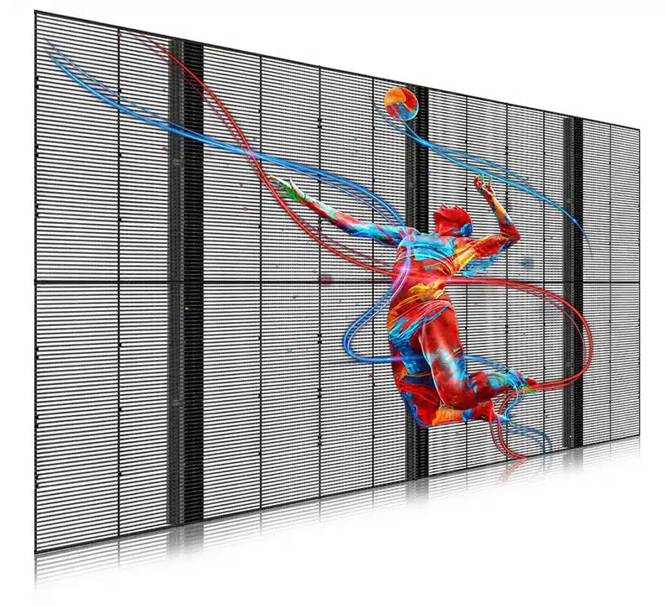
Aurora Display Transparent LED Screens combine high-brightness digital signage with an open, lightweight cabinet design. Mounted behind glazing or integrated into architectural structures, the screen displays full-colour video while allowing daylight and sightlines to remain visible through the LED grid.
Unlike adhesive transparent LED film, this product uses rigid LED modules housed within a supporting frame. The modular construction offers greater brightness, easier service access and the ability to build large-format installations for retail windows, shopping centres, corporate spaces and glass curtain walls.
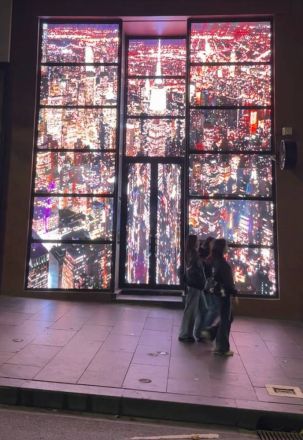
Designed for high-impact glass installations The open LED-bar structure reduces visual obstruction when the screen is not displaying content, yet delivers vivid images and strong visibility when powered. Cabinet sizes can be combined horizontally and vertically to suit the available glazing area and viewing distance. |
Specification | Typical Configuration |
Pixel pitch | 3.9 x 7.8 mm |
Panel formats | 500 x 500 mm, 1000 x 500 mm and 1000 x 1000 mm or customized to size |
Cabinet depth | Approximately 60 -88 mm |
Brightness | 6,000-7,000 nits |
Transparency | Approximately 72%; selected configurations may reach up to 80% |
Contrast ratio | Approximately 16000:1 |
Viewing angle | Up to 140 degrees |
Outdoor option | IP65-rated models available for suitable external installations |
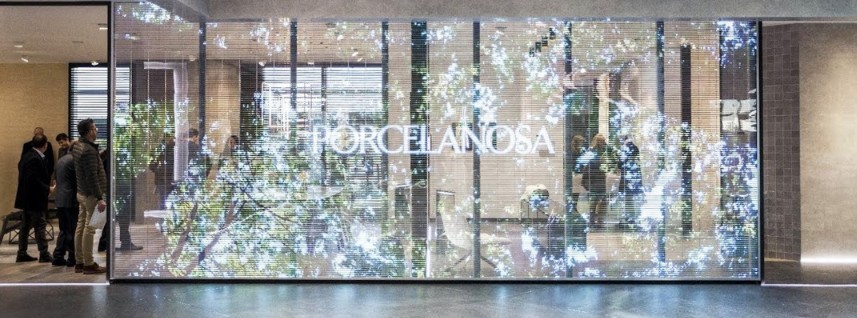
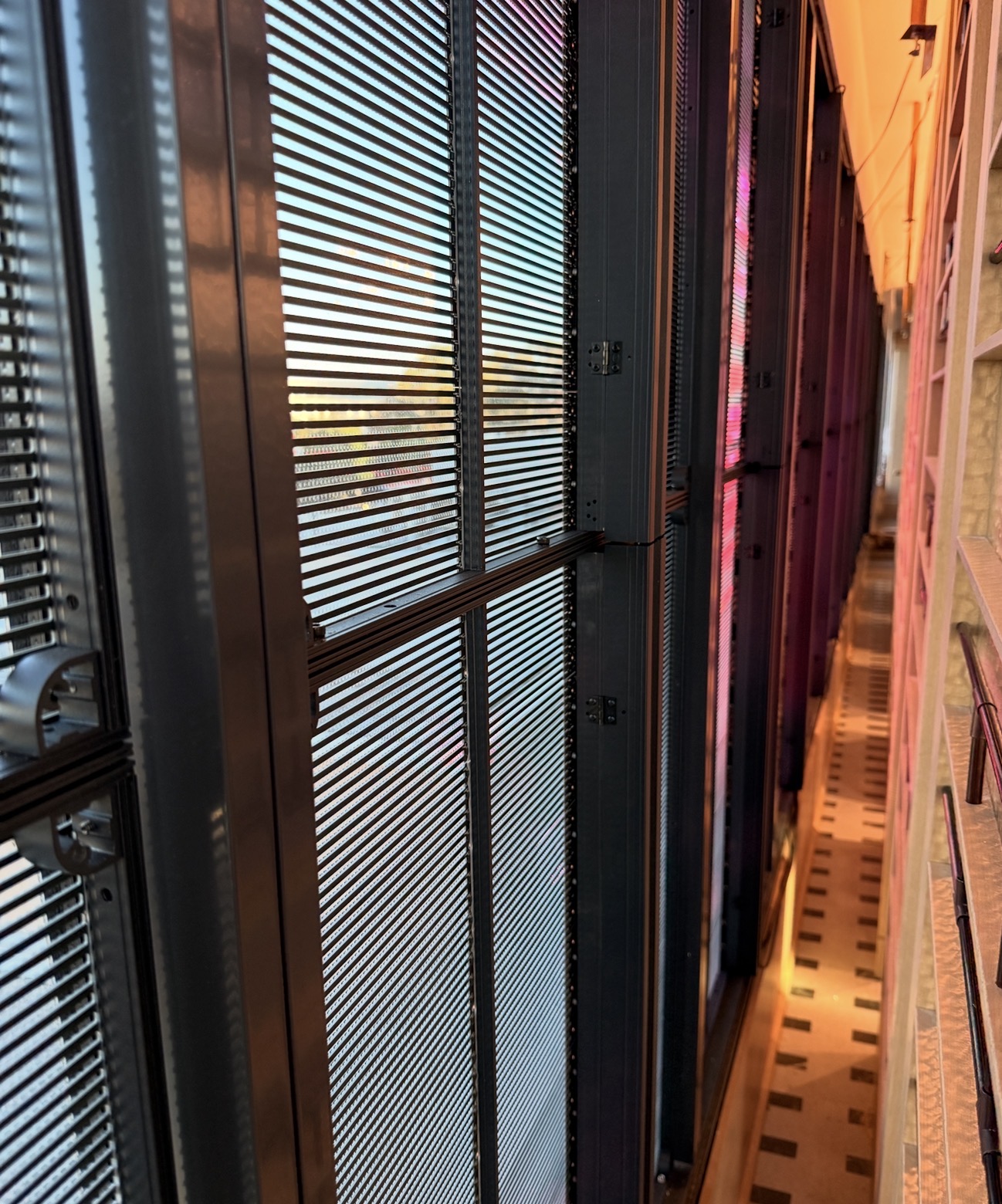
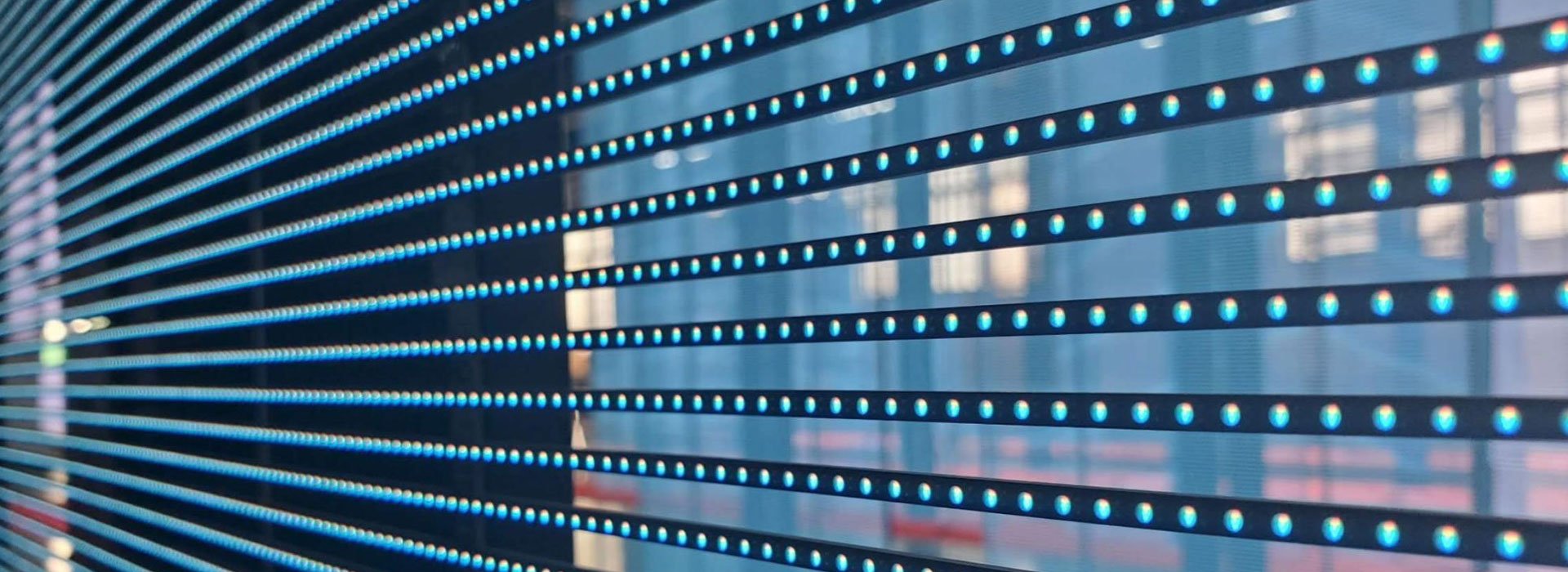
Transparent LED screens use rows of compact LED pixels mounted on slim horizontal or vertical rails. Open spaces between the LED bars allow light and background visibility to pass through the display. When the screen is operating, the individual red, green and blue LEDs work together to produce full-colour video, animation and advertising content.
The result is similar to looking through a digital louvre: the structure remains visible at close range, but from the intended viewing distance the content forms a cohesive image. This makes the technology particularly effective for glass-fronted environments where a conventional solid LED wall would block the window.
Each LED module is installed within a rigid cabinet or frame that supports the LED bars, power components and signal connections. Multiple cabinets can be joined to create a display that follows the dimensions of the window, atrium or facade. The framed design also allows individual modules and components to be accessed for maintenance without replacing the entire screen.
With typical brightness levels of 6,000-7,000 nits, transparent LED screens provide substantially stronger daylight visibility than transparent LCD, transparent OLED and many projection-based solutions. They are well suited to retail windows and architectural glass where ambient light can reduce the impact of lower-brightness displays.
Ceiling-Suspended A supporting frame can be suspended behind glazing, keeping the floor area clear and aligning the display with upper-level windows or shopfront structures. | Floor-Supported Freestanding or floor-mounted structures are useful where roof suspension is not practical and where service access is required from the rear. |
Common cabinet formats include 500 x 500 mm, 1000 x 500 mm, 1000 x 1000 mm or customized size to fit in the specific window frames. These standardised sizes can be combined into a single continuous canvas, making the system suitable for anything from one large shop window to a multi-storey glass feature. The final screen ratio, resolution and structural arrangement are designed around the site conditions and content requirements.
Planning consideration Transparent LED screens still require a structural frame, power distribution, data cabling and adequate ventilation. Early coordination with the glazing, electrical and structural teams helps achieve a clean installation and reliable service access. |
Retail Storefronts | Promotions, product launches and brand content displayed directly behind shop windows without fully obscuring merchandise or the interior. |
Shopping Centres | Large digital features across atriums, glass balustrades and prominent tenancy frontages. |
Corporate Buildings | Dynamic communication and brand storytelling across reception glazing and architectural glass walls. |
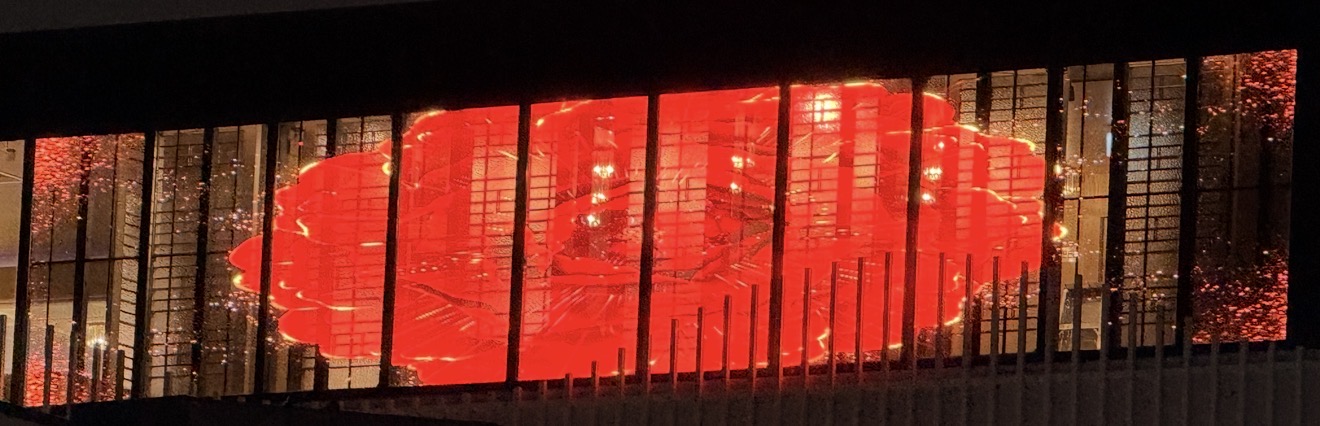
Glass Facades | Scalable large-format displays designed to activate curtain-wall areas and create high-impact night-time visuals. |
Exhibitions and Events | Transparent scenic elements and digital backdrops that allow lighting, structures and performers to remain visible through the display. |
Consideration | Framed Transparent LED | Transparent LED Film | Conventional LED Screen |
Construction | Rigid modular cabinets with a supporting frame | Ultra-thin adhesive film applied directly to glass | Solid enclosed LED cabinets |
Brightness | High; suitable for bright windows and large facades | Moderate to high, depending on model | High to very high |
Transparency | Typically around 70-80% | Often around 90% or more | No transparency |
Scale | Excellent for medium and large installations | Best for light retrofits and selected window sizes | Excellent for any solid-wall display |
Serviceability | Individual modules and components can be accessed | Film sections may require replacement | Modular and serviceable |
Best use | High-impact glass installations requiring brightness and scale | Minimal-structure applications where transparency is the priority | Maximum image quality where blocking the view is acceptable |
What is a transparent LED screen?
It is a full-colour LED display made from rows of LED light bars or narrow modules with open gaps between them. The openings allow light and visibility to pass through while the LED pixels create digital content.
Can a transparent LED screen be viewed in daylight?
Yes. High-brightness models are designed for window-facing and high-ambient-light environments. Content normally appears most dramatic after sunset, but the 6,000-7,000 nit output also provides strong daytime visibility when the screen and content are correctly specified.
How should I choose the pixel pitch?
Pixel pitch should be selected primarily according to viewing distance and desired image detail. Smaller pitches are better for storefronts and closer viewing, while larger pitches can be appropriate for broad facades viewed from farther away. Screen size, transparency and budget should also be considered together.
How is it different from a standard LED screen?
A standard LED screen uses a solid cabinet face and blocks the view behind it. A transparent LED screen spaces the LEDs across narrow rails, reducing the amount of material in the viewing area. This provides a more open appearance and a thinner visual profile, although the image is less dense than a conventional solid LED wall.
Can transparent LED screens be installed outdoors?
Yes, provided an outdoor-rated model and suitable supporting structure are selected. IP65 options are available for weather-exposed projects, but the final design must also consider drainage, wind loading, access, heat management and electrical protection.
Does the screen need to be fixed directly to the glass?
Not necessarily. Most framed transparent LED screens are mounted on an independent ceiling-suspended, floor-supported or custom steel/aluminium frame positioned behind or in front of the glazing. This avoids placing the full structural load on the glass itself.
A successful transparent LED installation depends on more than screen size. Aurora Display reviews the viewing distance, glass dimensions, ambient light, mounting method, access requirements, content type and local site conditions before recommending a panel layout and control solution.
Project information to prepare Useful details include glass width and height, photographs of the site, approximate viewing distance, indoor or outdoor exposure, preferred screen dimensions, installation height, available power and the type of content to be shown. |